
 Capitalism is an economic, social and political system where private individuals control a country’s trade and business. Capitalism flourishes because it celebrates the worst of the human condition: greed, self-interest and ego. It also recognizes the advantages of competition and market forces. This leads to a great tension between what is good for the capitalist and what is good for everyone else and the country.
In the United States this tension has resolved in favor of the capitalist time and again. Money talks. As a result of the capitalist wanting to maximize profits for themselves, we get poor wages and often are forced to work in unsafe conditions; all while they plunder the land and resources of our country and pollute our air, land and water.
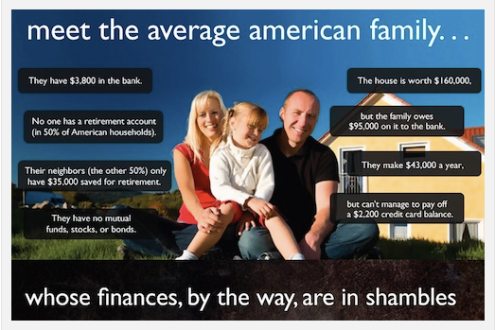 Of late, when workers try to organize or ask for a wage increase, the capitalist threatens to move their operations to another country. In fact, hundreds of U.S. companies have moved, simply to maximize profit for themselves, all the while putting Americans out of work. Clearly, what is good for the capitalist is not good for the country or its workforce.
So how is this resolved?
Socialism is not the answer, because giving the government control of business is a losing proposition. Instead, we need to examine what socialism is trying to accomplish for workers, and find a way to protect our country and its workers within our democratic values.
This is where the tenets of the Pro American Party shine. They create stability and security in a system that currently has neither. They also create an economic floor for workers that allow them the dignity of working and paying their own way in our society. In so doing it creates the forces required to make business work in a way that is in the best interests of our country. Importantly in this regard, it also protects businesses from unfair competition from abroad. In short, the PAP protects workers, increases economic security, protects U.S. business and serves to unite the country.
I encourage you to read all 12 tenets that have been discussed to date, but in the meantime, here are some highlights of how the Pro American Party resolves the tension between the capitalist and the country.
 Tenet #1 – Requires businesses who sell their products or services to Americans to employ Americans. It also provides for a very low tax rate for those companies that comply, while punishing companies that do not.
Tenet #2 – Abolishes welfare, but creates guaranteed jobs at a fair wage. Abolishes corporate welfare, but reduces corporate taxes. By guaranteeing a minimum wage of $12 an hour, it forces business to match that rate or be unable to attract workers.
Tenet #3 – Endorses the scientific method as a fair way to determine facts. As per our constitution, does not endorse religion, but allows our citizens to believe in whatever God they choose.
Tenet #4 – Creates in-country production requirements for all products deemed to have a connection to national security. This will bring manufacturing back to our country.
 Tenet #5 – Establishes a requirement for a balanced budget and revises the tax system. Changes the way budgets are established.
Tenet #6 – Ensures our military will remain the best in the world.
 Tenet #7 – Creates a requirement for all Americans to give 2 years of service to their country after graduating high school or reaching the age of 18. There are many ways to complete this service requirement. Once this service requirement is complete the recipient will be eligible for up to 2 years of free college or trade school education. Those who complete their 2 years of education with at least a C average are then eligible for an additional two years of college without cost.
Tenet #8 – Requires the title of all laws passed by Congress to truly reflect their impact. Creates a non-partisan group to evaluate all laws and to publish their findings prior to a law being enacted.
Tenet #9 – Creates a yearly survey of all businesses and determines the educational, vocational and other skill requirements of businesses and broadcasts that information to all school districts in the country.
Tenet #10 – Punishes businesses that pollute our environment. Creates a fund, paid by business, to correct pollution problems.
 Tenet #11 – Protects our military veterans and their physical and emotional health. Provides a higher hourly wage for all veterans…for the rest of their lives. Provides additional death payments for the spouses/families of veterans who die in the line of duty.
Tenet #12 – Eliminates high crime/high unemployment areas by bringing together business and government resources.
 Have you voted? Millions have….but no matter who gets elected it will make no difference in what laws get passed. Don’t believe me? Read on.
 There were plenty of cases in which policies supported by the wealthy or the big lobbies became law even though they were opposed by the popular majority (e.g. the North American Free Trade Agreement, the Bush tax cuts and the 1999 repeal of the Glass-Steagall law — which was widely blamed for facilitating the economic collapse of 2007-8 — that were adopted even though they were opposed by the majority of Americans.)

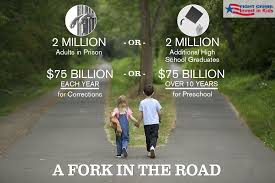 We would argue that we should fix ’em, especially our youth.
 As a child grows their environment widens. They play with the kids in their neighborhood and also begin attending school. At this point the way they were raised in their home begins to be affected by peers and school influences. The best thing that can happen to the child raised in the home previously described is that they find supportive friends and love school. In such a case these would become protective factors from the negatives found in the home. Often though, the negative home environment causes the child to go to school with an attitude, a bad attitude. When this happens school is also a negative experience and the child only forms friendships with other disillusioned children…and the number of criminological factors begin to grow.
 It is our belief that the first 4 years of school (K-3) are the most important for a child’s future development. If risk factors such as hyperactivity, aggression, antisocial behaviors and beliefs, dishonesty and others can be identified when the child is young there is an increased chance these behaviors can be modified. Of note, it may only be when a child goes to school that their parents’ lack of parenting skills becomes evident. If true changes are to be made with the child we must work closely with the parent(s) to provide them the education and support required so real changes can be made.
 There are many successful programs already in existence that have proven themselves able to change the lives of both parents and children for the better. Some start before children even start school, others later. What they all have in common is that they help the parents, not just the children. Here is a link to some of those successful programs:
  These programs are not as wide-spread as they might otherwise be because they are cost money. This is why many of our citizens don’t support them, they don’t want to pay the cost. In our view this is short-sighted because we will absolutely pay the cost, either now or later. The problem is that later costs even more, both in money and ruined lives…and what does it say about us? You’re at the fork in the road, which path should we take?
 The current state of criminological research allows us to predict those who are most likely to commit crime. We can not, however, specifically point to a single individual and say s/he will commit a crime…with real certainty. Prediction models are based on risk factors. Individual factors alone do not predict criminality, but when factors start adding up so does the risk of offending. Since these factors are now known, society can make policy choices as to how it chooses to deal with this problem. Some advocate for early intervention, while others advocate not spending money on potential criminal activity, but instead wait for real criminality and then throw the criminals in jail.
 Risk factors are comprised of characteristics that have been identified with increased criminality. In contrast, protective factors are characteristics that serve to mitigate risk factors. In essence, a protective factor ‘protects’ a person from criminality when they might otherwise resort to crime. As mentioned earlier, risk factors have a multiplicative effect on the likelihood to commit a crime. A 10-year-old boy exposed to 6 or more risk factors is 10 times as likely to commit a violent crime by the age of 18 as one who has been exposed to only one factor.
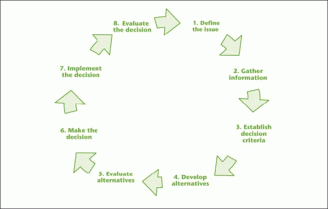 The direction our policy takes should be informed by 3 dimensions of concern: the individual dimension, helping turn around that youth in danger of becoming a criminal; the moral dimension, the value we put on victims and the pain and suffering that will occur if we do not act; and the societal dimension, what our action or inaction says about us as a nation.
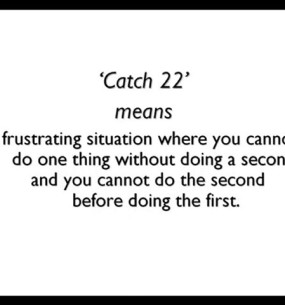 The relationship between criminality and employment is a “catch-22” situation. Communities known as high crime areas are also high in criminality. So employment would help lower the crime rate. But at the same time these communities are unattractive to investors because they are high crime areas, so no jobs will be created. And so the cycle continues.
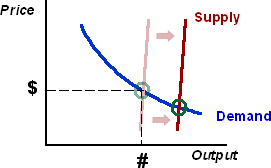 This type of intervention is necessary if we are to eliminate historically high crime areas and allow them to be transformed into cohesive neighborhoods where it is safe for both business and people to work and live.
 Marrying economic opportunity to high crime areas, when accomplished, eliminates the isolation of high poverty neighborhoods from the legitimate job market. For the youth in the neighborhood, knowing legitimate jobs are available will increase their motivation to go to school. Once they can see a real connection between education and financial success high school becomes more attractive. And of course, more attractive jobs means less crime.
 The Pro American Party believes that all Americans deserve to be able to work. This is true whether they have a criminal record or not. The issue of criminality is a complex one and needs to be viewed from multiple lens. This post intends to examine some of the many factors that cause persons to resort to criminality and will attempt to get you to agree that if we can change those factors we can reduce crime. Because of the complexity of this issue we will devote this post and two or three more posts to the topic before we move on.
 Remember the book “The Scarlet Letter?” Without telling you, this book wrote about labeling theory. Labeling theory is the idea that once someone is labeled in a certain way, let’s say “felon” for instance, people will look at them that way forever. In fact, even the person who has acquired the label will end up acting in accordance with the label given. Labeling theory predicts that those who think of themselves as felons will act as felons. Being turned down for a job because of their record, simply reinforces the ‘felon’ label and encourages them to act in the way that is expected of them. If you are a felon looking for work, but can’t find it and everyone tells you it is because of your criminal record…what is left? For many, committing a crime to get the money needed to survive seems the only choice. As an aside, for those young parents out there, if you want to help your children get a good start in life, begin calling them kind and thoughtful and sweet and smart.
 It really could not be otherwise. One of the most important factors in determining whether someone gets involved in criminality is whether their friends are. If their friends are involved in a gang, they almost certainly will be too. And youth gangs are a big source of crime and most live in this environment. Add to that poverty, impulsiveness, drugs and a lack of proper parental oversight and the results will be stacked in your favor for producing a criminal time and again. Toss in a belief that school is a waste of time and you’ll really stack the deck in your favor.
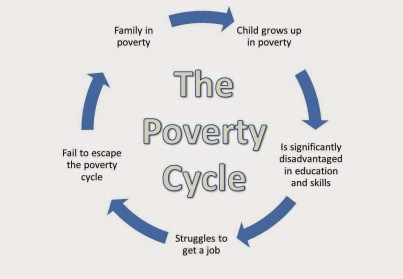 People adopting this culture of poverty do not participate in community life or join political parties; they make little use of banks, hospitals and the like. According to Lewis the culture of poverty perpetuates poverty: It “tends to perpetuate itself from generation to generation because of its effect on children. By the time slum children are aged six or seven, they have usually absorbed the basic values and attitudes of their subculture and are not psychologically geared to take full advantage of changing conditions or increased opportunities which may occur in their lifetime.”
 This is where the Pro American Party’s tenet #2 comes in. Tenet #2 opens the door for full employment, health care and economic stability. For many it will be the first time in their lives that this opportunity will have presented itself. It is both our hope and belief that this opportunity, over time, will help to minimize the ‘culture of poverty’ because in addition to a job, it will allow hope for a brighter future to rise again.
 Have you ever thought, ‘boy, I’d love to be rich?’ Most people have and if you are American I know you have. It’s fun to dream about all the ‘things’ we might have…at least a little. The problem with this dream comes when we try to make it a reality.
 If you want to be happy it is important to look inside yourself to find your true values. More important than money is the feeling of purpose. If you can find a job that answers this need and pays you enough to live on….congratulations, you are one of the few. If you are the one in a million whose purpose ends up making you rich…wow…just don’t forget your original values when you see how your wealth has screwed up your relationships with friends and family…and meeting new people without questioning their motives will never happen again.
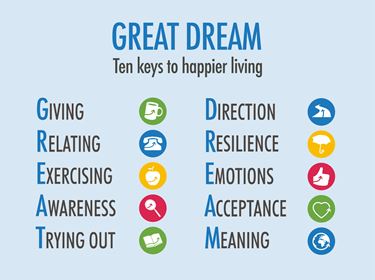 Here is another site I would recommend. It is called ‘Action for Happiness’ and can be found at
  Make sure your giving results in improving the lives of others, especially those in need. Giving a poor little girl a coloring book or bagging food at a food bank might just make your day. Once you have giving down, work on the other keys and with each effort your own life will take on extra meaning.
 There has been an ongoing debate about whether policing is a profession, simply a calling or just a job. In the United States professions are defined as occupations that have common educational requirements, national accreditation, ongoing training requirements, a single code of ethics, and exacting certification requirements. None of this applies to policing, at least not in a uniform manner.
 If you talk with officers it is easy to feel their frustration. They work hard every day, but still feel that they don’t have public support. Further, they state this is resulting in a lowered level of cooperation and a lower solve rate.
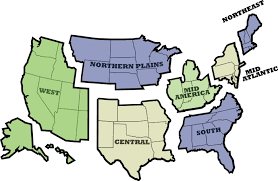 It is important to know that the NPA does not need to be located in only one place. It could easily be a single entity in terms of leadership, but still have regional academies. Such an approach might serve to further connect the public with the NPA and make it easier for chiefs and sheriffs to visit, since the academy would likely be closer.
 Many small departments cannot afford an academy at all, and are forced to accept recruits who have attended private police academies….often in situations in which the recruits had to pay for their training themselves. The NPA would largely eliminate these inequalities between departments.
 Research shows the the single most important factor in determining whether or not the police will solve a crime is their relationship with the public. The NPA would go a long way towards building that trust. It follows then that we could expect the NPA to help improve the solve rate, furthering public confidence.
 In such an instance, departments could easily go to the NPA to recruit those candidates that best meet their needs. As an improvement to the current recruiting process, these candidates would already have a track record at the academy, allowing departments to be much more successful in finding good recruits as they would be able to see and compare recruits according to their department’s standards and needs. It would be better for recruits as well. Recruits would be able to evaluate all offers and go to the department of their choice.
 If I Had The Power