
 There has been an ongoing debate about whether policing is a profession, simply a calling or just a job. In the United States professions are defined as occupations that have common educational requirements, national accreditation, ongoing training requirements, a single code of ethics, and exacting certification requirements. None of this applies to policing, at least not in a uniform manner.
If we were to apply the current standards for police training to the medical field we would be disheartened to learn that the term ‘doctor’ would have different meanings in different states. If everyone in the medical field was called a doctor, regardless of training, you might end up with a veterinarian when you actually need a surgeon.
The creation of the NPA opens the door for policing to become a profession. By having national standards and national accreditation, police officers in any city could laterally transfer anywhere in the country. In addition, when an occupation is raised to the level of a profession, the pay gets better.
Recent events have caused the public to have their lowest approval ratings of police in decades. If you talk with officers it is easy to feel their frustration. They work hard every day, but still feel that they don’t have public support. Further, they state this is resulting in a lowered level of cooperation and a lower solve rate.
Because the NPA will listen to public concerns about the police and develop training programs to address them, public support for the police will improve. National certification will give the police more gravitas with the public and in court.
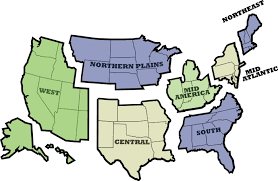 It is important to know that the NPA does not need to be located in only one place. It could easily be a single entity in terms of leadership, but still have regional academies. Such an approach might serve to further connect the public with the NPA and make it easier for chiefs and sheriffs to visit, since the academy would likely be closer.
The NPA would also serve a financial purpose. Local and state academies cost a lot of money to maintain and operate.  Many small departments cannot afford an academy at all, and are forced to accept recruits who have attended private police academies….often in situations in which the recruits had to pay for their training themselves. The NPA would largely eliminate these inequalities between departments.
Trust between the police and the public is a topic that cannot be overstated. In a democracy trust is fundamental for police organizations.  Research shows the the single most important factor in determining whether or not the police will solve a crime is their relationship with the public. The NPA would go a long way towards building that trust. It follows then that we could expect the NPA to help improve the solve rate, furthering public confidence.
Just last week we talked with the chief of a large West coast department. He complained that all of his recruiting efforts were expensive and largely ineffective. Where in the past thousands of applicants would apply for 100 positions, these days he often has trouble finding enough qualified applicants to fill a class. The NPA will help with this by expanding the applicant field.
Returning, for a moment, to the DoD (from the previous post) and our nation’s veterans. The Pro American Party strongly supports the idea of creating a path for qualified separating veterans to go directly into the NPA. In such an instance, departments could easily go to the NPA to recruit those candidates that best meet their needs. As an improvement to the current recruiting process, these candidates would already have a track record at the academy, allowing departments to be much more successful in finding good recruits as they would be able to see and compare recruits according to their department’s standards and needs. It would be better for recruits as well. Recruits would be able to evaluate all offers and go to the department of their choice.
This would not prevent departments from selecting their own recruits and then sending them to the academy. Even when departments chose to send an entire recruit class to the NPA they would enjoy substantial cost savings as compared to a local academy.
 They have been providing training and leadership in law enforcement circles since 1940. Their stated goal is to raise the level of professionalism in law enforcement, making them a perfect choice for this task. The NSA’s Center for Public Safety will take the lead in this effort.
 Founded in 1893, the association’s goals are to advance the science and art of police services; to foster police cooperation and the exchange of information and experience among police administrators throughout the world; to bring about recruitment and training in the police profession of qualified persons; and to encourage adherence of all police officers to high professional standards of performance and conduct. Within the IACP, the Training and Professional Services Division will be the lead division.
 For those of you with an understanding and knowledge of the origins of law enforcement in the United States you will know that unlike virtually any other country, our nation made a determination, from the very beginning, to have local control of their police forces. There is nothing in this initiative that would change that. Individual cities and departments can opt in or out of this training as they choose. This initiative is limited to training and in no way affects the control or authority over or of any department.
 The Pro American Party strongly advocates creating a National Police Academy (NPA). Such an academy is in the best interests of all Americans and provides us with an opportunity to greatly improve the collective training of police officers throughout our nation. In our view sending officers to this academy should be voluntary on the part of each department, as should accepting officers from this academy. We believe the training and results will speak for themselves and that departments will naturally gravitate to the NPA because they will see it is in their own best interests to do so.
 So how does one start an Academy? When beginning from scratch the best place to start is by talking with the stakeholders. The first group should be comprised of current law enforcement professionals. In our view this group is further broken down into executive, management and line officer sub-groups. The executive level group would be comprised of those personnel who have leadership and vision functions within departments. The management group would be comprised of different levels of supervisors who are responsible to translate the vision of leadership personnel into operational reality. The line officers are those who work the streets and have a direct connection with citizens.
 The second group of stakeholders is the general public. This group should be representative of our country…meaning that we will need persons from each of the races and cultures that can be found within our nation. We also need to represent different socioeconomic groups, because each group has different types of interactions with the police and therefore unique viewpoints.
 Once representatives of each of these groups is selected their mandate will be to determine the types of training and skills today’s police need to function properly within their communities, from each group’s individual point of view. It will then be the job of the leadership of the NPA to design the program so that it merges the requirements of this combined group into a cohesive and comprehensive training program.
 If I Had The Power