
 The relationship between criminality and employment is a “catch-22” situation. Communities known as high crime areas are also high in criminality. So employment would help lower the crime rate. But at the same time these communities are unattractive to investors because they are high crime areas, so no jobs will be created. And so the cycle continues.
This reciprocal relationship presents a difficult problem. Potential businesses are wary of such areas because both their property and personnel are at risk. Goods are likely to be stolen, the property may be damaged, employees could be assaulted and customers intimidated. If business is to be attracted to the area these conditions must be mitigated.
Business also has another concern, the potential pool of employees. This same geographic area may be filled with unemployed people, but do those same people have the skill-set to get and keep attractive jobs? You know, the type of jobs that pay well above minimum wage, offer a chance at promotion and provide a sense of purpose or accomplishment?
This is where the Pro American Party comes in: Tenet #12. “In areas of combined high crime and high unemployment the PAP believes there is a beneficial role for the Department Of Labor to assist that will be in the best interests of all Americans. The DOL will limit the risk to investors who create businesses in high crime areas by providing low cost insurance against theft and/or damage to their property or product. The DOL will also work with the business to determine the skill-set needed to be a successful employee and provide needed training to individuals living in the area.”
 This type of intervention is necessary if we are to eliminate historically high crime areas and allow them to be transformed into cohesive neighborhoods where it is safe for both business and people to work and live.
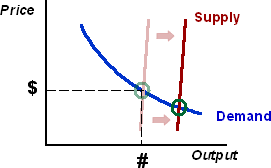
This program will make supply-side economists happy because job training improves the attractiveness of individuals to employers. It will also be attractive to demand-side economists because it reduces the costs of employment borne by the employer.
The Pro American Party believes the strategy outlined above is a much stronger and less expensive option designed to increase employment than previously tried programs. Back in 1992, HUD provided $168 million to fund ‘Moving to Opportunity;’ a test program to reduce unemployment and crime. With this idea HUD thought they would move residents in high crime areas out of the area and near areas where jobs existed. HUD did not expect (but I’d bet you already have)that this program met significant opposition from suburban residents afraid of the impact of poor minority families on their communities. Further, it was also a failure for the families that it wanted to move because they felt completely out of their element in new and unfamiliar neighborhoods.
 Marrying economic opportunity to high crime areas, when accomplished, eliminates the isolation of high poverty neighborhoods from the legitimate job market. For the youth in the neighborhood, knowing legitimate jobs are available will increase their motivation to go to school. Once they can see a real connection between education and financial success high school becomes more attractive. And of course, more attractive jobs means less crime.
A double win-win for them, their community, the businesses involved and the entire country.
 The Pro American Party believes that all Americans deserve to be able to work. This is true whether they have a criminal record or not. The issue of criminality is a complex one and needs to be viewed from multiple lens. This post intends to examine some of the many factors that cause persons to resort to criminality and will attempt to get you to agree that if we can change those factors we can reduce crime. Because of the complexity of this issue we will devote this post and two or three more posts to the topic before we move on.
 Remember the book “The Scarlet Letter?” Without telling you, this book wrote about labeling theory. Labeling theory is the idea that once someone is labeled in a certain way, let’s say “felon” for instance, people will look at them that way forever. In fact, even the person who has acquired the label will end up acting in accordance with the label given. Labeling theory predicts that those who think of themselves as felons will act as felons. Being turned down for a job because of their record, simply reinforces the ‘felon’ label and encourages them to act in the way that is expected of them. If you are a felon looking for work, but can’t find it and everyone tells you it is because of your criminal record…what is left? For many, committing a crime to get the money needed to survive seems the only choice. As an aside, for those young parents out there, if you want to help your children get a good start in life, begin calling them kind and thoughtful and sweet and smart.
 It really could not be otherwise. One of the most important factors in determining whether someone gets involved in criminality is whether their friends are. If their friends are involved in a gang, they almost certainly will be too. And youth gangs are a big source of crime and most live in this environment. Add to that poverty, impulsiveness, drugs and a lack of proper parental oversight and the results will be stacked in your favor for producing a criminal time and again. Toss in a belief that school is a waste of time and you’ll really stack the deck in your favor.
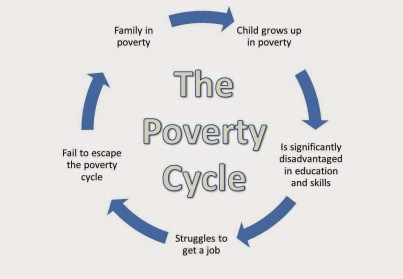 People adopting this culture of poverty do not participate in community life or join political parties; they make little use of banks, hospitals and the like. According to Lewis the culture of poverty perpetuates poverty: It “tends to perpetuate itself from generation to generation because of its effect on children. By the time slum children are aged six or seven, they have usually absorbed the basic values and attitudes of their subculture and are not psychologically geared to take full advantage of changing conditions or increased opportunities which may occur in their lifetime.”
 This is where the Pro American Party’s tenet #2 comes in. Tenet #2 opens the door for full employment, health care and economic stability. For many it will be the first time in their lives that this opportunity will have presented itself. It is both our hope and belief that this opportunity, over time, will help to minimize the ‘culture of poverty’ because in addition to a job, it will allow hope for a brighter future to rise again.
 Have you ever thought, ‘boy, I’d love to be rich?’ Most people have and if you are American I know you have. It’s fun to dream about all the ‘things’ we might have…at least a little. The problem with this dream comes when we try to make it a reality.
 If you want to be happy it is important to look inside yourself to find your true values. More important than money is the feeling of purpose. If you can find a job that answers this need and pays you enough to live on….congratulations, you are one of the few. If you are the one in a million whose purpose ends up making you rich…wow…just don’t forget your original values when you see how your wealth has screwed up your relationships with friends and family…and meeting new people without questioning their motives will never happen again.
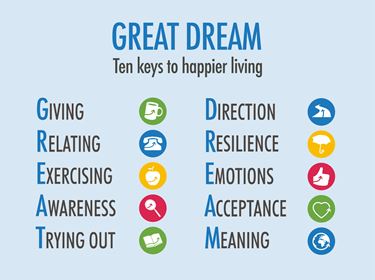 Here is another site I would recommend. It is called ‘Action for Happiness’ and can be found at
  Make sure your giving results in improving the lives of others, especially those in need. Giving a poor little girl a coloring book or bagging food at a food bank might just make your day. Once you have giving down, work on the other keys and with each effort your own life will take on extra meaning.
 There has been an ongoing debate about whether policing is a profession, simply a calling or just a job. In the United States professions are defined as occupations that have common educational requirements, national accreditation, ongoing training requirements, a single code of ethics, and exacting certification requirements. None of this applies to policing, at least not in a uniform manner.
 If you talk with officers it is easy to feel their frustration. They work hard every day, but still feel that they don’t have public support. Further, they state this is resulting in a lowered level of cooperation and a lower solve rate.
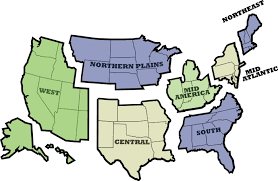 It is important to know that the NPA does not need to be located in only one place. It could easily be a single entity in terms of leadership, but still have regional academies. Such an approach might serve to further connect the public with the NPA and make it easier for chiefs and sheriffs to visit, since the academy would likely be closer.
 Many small departments cannot afford an academy at all, and are forced to accept recruits who have attended private police academies….often in situations in which the recruits had to pay for their training themselves. The NPA would largely eliminate these inequalities between departments.
 Research shows the the single most important factor in determining whether or not the police will solve a crime is their relationship with the public. The NPA would go a long way towards building that trust. It follows then that we could expect the NPA to help improve the solve rate, furthering public confidence.
 In such an instance, departments could easily go to the NPA to recruit those candidates that best meet their needs. As an improvement to the current recruiting process, these candidates would already have a track record at the academy, allowing departments to be much more successful in finding good recruits as they would be able to see and compare recruits according to their department’s standards and needs. It would be better for recruits as well. Recruits would be able to evaluate all offers and go to the department of their choice.
 They have been providing training and leadership in law enforcement circles since 1940. Their stated goal is to raise the level of professionalism in law enforcement, making them a perfect choice for this task. The NSA’s Center for Public Safety will take the lead in this effort.
 Founded in 1893, the association’s goals are to advance the science and art of police services; to foster police cooperation and the exchange of information and experience among police administrators throughout the world; to bring about recruitment and training in the police profession of qualified persons; and to encourage adherence of all police officers to high professional standards of performance and conduct. Within the IACP, the Training and Professional Services Division will be the lead division.
 For those of you with an understanding and knowledge of the origins of law enforcement in the United States you will know that unlike virtually any other country, our nation made a determination, from the very beginning, to have local control of their police forces. There is nothing in this initiative that would change that. Individual cities and departments can opt in or out of this training as they choose. This initiative is limited to training and in no way affects the control or authority over or of any department.
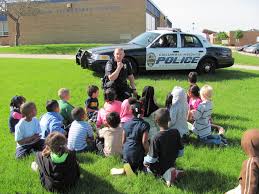 The Pro American Party strongly advocates creating a National Police Academy (NPA). Such an academy is in the best interests of all Americans and provides us with an opportunity to greatly improve the collective training of police officers throughout our nation. In our view sending officers to this academy should be voluntary on the part of each department, as should accepting officers from this academy. We believe the training and results will speak for themselves and that departments will naturally gravitate to the NPA because they will see it is in their own best interests to do so.
 So how does one start an Academy? When beginning from scratch the best place to start is by talking with the stakeholders. The first group should be comprised of current law enforcement professionals. In our view this group is further broken down into executive, management and line officer sub-groups. The executive level group would be comprised of those personnel who have leadership and vision functions within departments. The management group would be comprised of different levels of supervisors who are responsible to translate the vision of leadership personnel into operational reality. The line officers are those who work the streets and have a direct connection with citizens.
 The second group of stakeholders is the general public. This group should be representative of our country…meaning that we will need persons from each of the races and cultures that can be found within our nation. We also need to represent different socioeconomic groups, because each group has different types of interactions with the police and therefore unique viewpoints.
 Once representatives of each of these groups is selected their mandate will be to determine the types of training and skills today’s police need to function properly within their communities, from each group’s individual point of view. It will then be the job of the leadership of the NPA to design the program so that it merges the requirements of this combined group into a cohesive and comprehensive training program.

 If I Had The Power